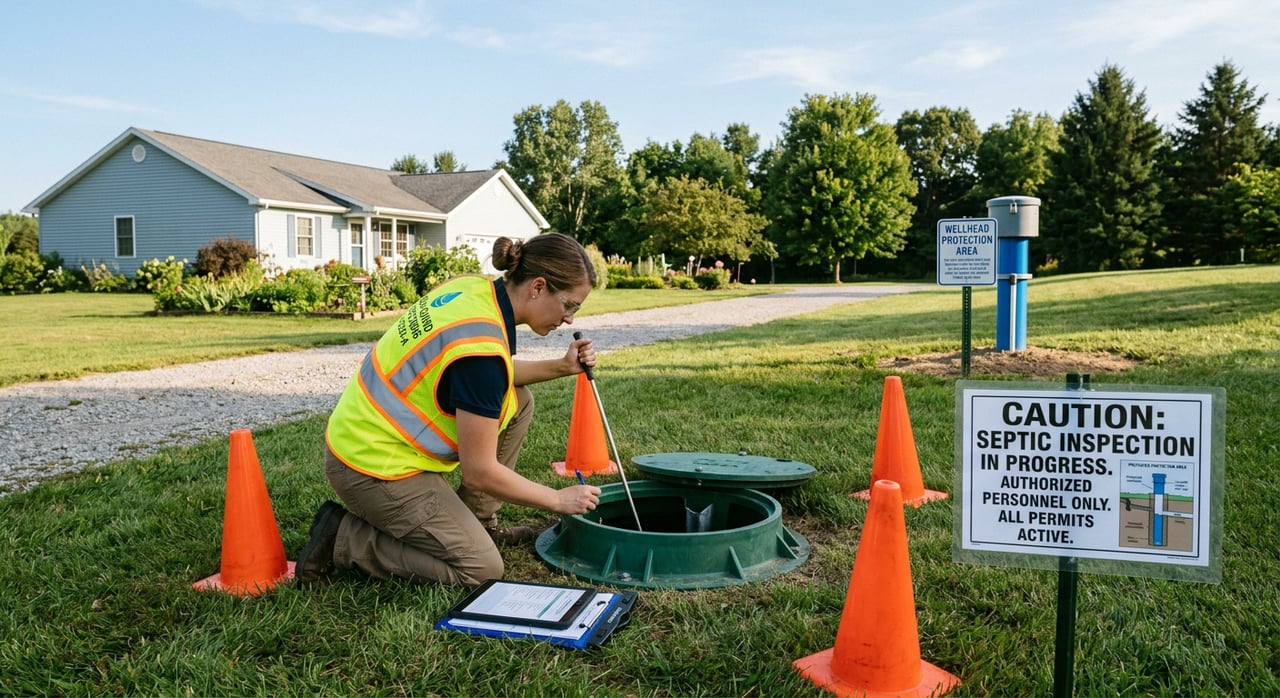
A home served by a private well and septic system is not automatically more difficult to own or less desirable than a home connected to public utilities. These systems are common throughout Catawba County and the surrounding region. The difference is that the buyer must verify a different set of records, physical components, maintenance responsibilities, and future-use limitations.
The right approach is not to treat every private system as a warning sign. It is to understand exactly what serves the property, how that system is documented, what qualified professionals observe, and whether the site supports the buyer's plans. That work should begin early in the negotiated North Carolina due-diligence period because records, sampling, specialist availability, and follow-up questions can take time.
Use this guide as an organizing framework. The contract, property, lender, and inspection findings will determine which investigations are appropriate in a specific transaction.
1 Confirm the Actual Utility Setup
Do not assume a property has public water or sewer because it carries a Hickory mailing address or sits near a developed area. Begin by confirming whether the home uses public water, a private well, public sewer, a septic system, or a combination such as public water with septic disposal.
Verify the arrangement through the listing information, seller disclosures, utility providers, county records, and the physical property. If a system appears to cross a parcel boundary or serve more than one home, identify the recorded easements, shared-system agreements, access rights, electrical responsibilities, and maintenance obligations that apply.
2 Request the Available County Records
Catawba County Environmental Health permits and supervises septic installations where sewer service is unavailable and provides a process for requesting a copy of an existing septic permit. Ask for the permit, soil evaluation, system layout or as-built information, repair records, and any other available documents connected to the parcel.
For the well, ask Environmental Health what permit, construction, sampling, or repair records are available. A missing or incomplete historic record does not answer whether the system works today, but it is important information. It may change the inspection plan or create questions that need to be resolved with the county, seller, attorney, surveyor, or other qualified professional.
3 Compare the Septic Permit With the Current Home
Compare the septic documentation with the home's represented bedroom count, additions, converted spaces, and current layout. Septic design and permitting are tied to wastewater capacity and site conditions. A finished room, addition, or later renovation may not be reflected in the original permit.
A difference between the permit and the current property does not create one universal conclusion. It does create a question that should be investigated before the buyer relies on a particular bedroom count, renovation, or future use. Avoid assuming that the tax record, marketing description, and septic capacity are automatically the same thing.
4 Locate the Entire Septic System and Repair Area
The septic tank is only one part of the system. Buyers should identify the tank, drainfield, distribution components, pumps or controls when present, and the designated repair or replacement area. NC State Extension advises owners to keep the permit and soil evaluation, which can show the approximate component locations and the repair area identified when the site was permitted.
This matters beyond maintenance. A pool, garage, addition, driveway expansion, detached building, or major grading project can conflict with the active system or protected repair area. Buyers with future plans should compare those plans with the permit, survey, setbacks, easements, topography, and county requirements before assigning value to an improvement that may not fit.
5 Order a Property Specific Septic Evaluation
A pumping receipt is useful maintenance history, but it is not the same as a buyer's septic evaluation. Ask the selected professional to explain the proposed scope in writing. Depending on the system and site, the work may include locating components, opening accessible lids, observing liquid and solids levels, checking visible tank and baffle condition, evaluating pumps or alarms, reviewing flow to the system, and examining the drainfield area for signs of concern.
Confirm whether pumping is included, recommended, or handled separately and who will restore disturbed areas. More complex systems may have required operator or maintenance arrangements. Obtain copies of available service records and ask the inspector to distinguish current observations from items that could not be evaluated.
Visible warning signs can include slow drains, sewage backups, odors, wet or unusually lush areas over the drainfield, surfacing wastewater, or pump alarms. None of those signs should be diagnosed from a checklist alone. They call for prompt evaluation by the appropriate county office and qualified professionals.
6 Test the Water and Evaluate the Well System
Water quality and well performance are separate questions. A water sample can help evaluate the selected contaminants or characteristics requested for the test, while a performance evaluation addresses the well, pump, pressure system, and the amount and consistency of water delivered to the home.
Catawba County's water-sample application allows requests for bacteriological testing, inorganic chemical testing, or other specified sampling. The form also asks about well type, accessibility, power, past testing, taste or odor concerns, the sanitary seal, wellhead height, and whether the well supplies more than one home. Confirm the recommended test panel, sampling procedure, timing, fees, and any lender requirements directly with the county, laboratory, and lender for the specific transaction.
A well-system review may also address the well type and location, visible casing and wellhead protection, pump operation, pressure tank, flow or yield, filtration or treatment equipment, service history, and the electrical supply. If treatment equipment is present, determine why it was installed, what media or consumables it uses, how often it is serviced, and whether a sample should be taken before or after treatment.
7 Review Ownership and Maintenance Responsibilities
Ask for maintenance records rather than relying on a verbal statement that the system has always worked. For septic systems, useful records may include pumping, effluent-filter cleaning, repairs, permits, operator visits, and alarm or pump service. For wells, look for pump and pressure-tank work, disinfection, water-test results, treatment-system service, and well repairs.
Do not apply one universal replacement schedule or maintenance cost to every property. Conventional and advanced septic systems can have different requirements, and drilled, bored, dug, or shared wells can involve different risks and responsibilities. Build a property-specific ownership plan from the system type, records, inspection findings, county requirements, and qualified recommendations.
8 Start Early in the Due Diligence Period
North Carolina's due-diligence process gives the buyer an agreed period to investigate the property and transaction. The North Carolina Real Estate Commission identifies septic inspections among the common investigations a buyer may pursue and emphasizes negotiating enough time to complete the necessary inquiries.
Order records and schedule specialists promptly after the contract becomes effective. Leave time to receive laboratory results, obtain clarification, review estimates, and discuss any repair or concession request. Buyers may ask for repairs or other terms, but the seller is not automatically required to agree. Contract rights and deadlines control, so coordinate closely with the broker and use the attorney, lender, county officials, inspectors, laboratories, and contractors for their respective roles.
Buyer Checklist Before Closing
Utility setup | Confirm public or private water and sewer service; identify any mixed or shared arrangement |
County records | Request available septic permits, layouts, soil information, repair records, and well records |
Capacity and use | Compare septic documentation with the represented bedrooms, additions, and current layout |
System locations | Locate the wellhead, septic tank, drainfield, pumps or controls, and repair area |
Site plans | Compare pools, additions, garages, driveways, grading, and outbuildings with protected areas |
Septic evaluation | Confirm the inspector's scope, access, pumping plan, limitations, and written findings |
Water testing | Select the test panel and approved sampling process with the county, lab, and lender |
Well performance | Review pump, pressure tank, flow or yield, wellhead, treatment equipment, and service history |
Maintenance | Collect pumping, repair, operator, sampling, filtration, and equipment-service records |
Transaction timing | Complete investigations, estimates, decisions, and any negotiations before the controlling deadlines |
Utility setup | Confirm public or private water and sewer service; identify any mixed or shared arrangement |
How OREG Helps Buyers Evaluate Private Systems
Osborne Real Estate Group helps buyers organize the property records, specialist appointments, open questions, and contract deadlines that apply to a specific home. We do not replace the county, inspector, laboratory, lender, attorney, or contractor. We help keep their information connected to the buyer's decision.
Considering a Catawba County property with a private well or septic system? Send OREG the address before making an offer. We will help identify the records and questions that should be built into your property review.
Frequently Asked Questions
Where can I request an existing septic permit in Catawba County?
Catawba County Environmental Health provides an online request link on its septic-systems page. Confirm that the parcel and address are correct, then ask what supporting records are available.
Is pumping the septic tank the same as an inspection?
No. A pumping record documents maintenance. A buyer should ask the selected professional to describe the evaluation scope and written findings for the specific system.
Does a septic permit determine how a home may be advertised or used?
The permit is an important capacity and site record, but property descriptions, building records, current use, and legal questions must be evaluated together. A mismatch should be investigated rather than reduced to a universal rule.
Should buyers test private well water?
Water quality is property-specific. Confirm the appropriate test panel, sampling procedure, timing, fees, and lender requirements with the county, laboratory, and lender.
Can I add a pool garage or addition later?
Possibly, but do not assume the site can support it. Review the septic system, repair area, well setbacks, easements, survey, zoning, topography, and permitting requirements first.
This article provides general real-estate information, not legal, engineering, environmental, lending, or inspection advice. Requirements and system conditions vary. Buyers should verify material facts through the contract, official records, inspections, testing, and the appropriate qualified professionals.