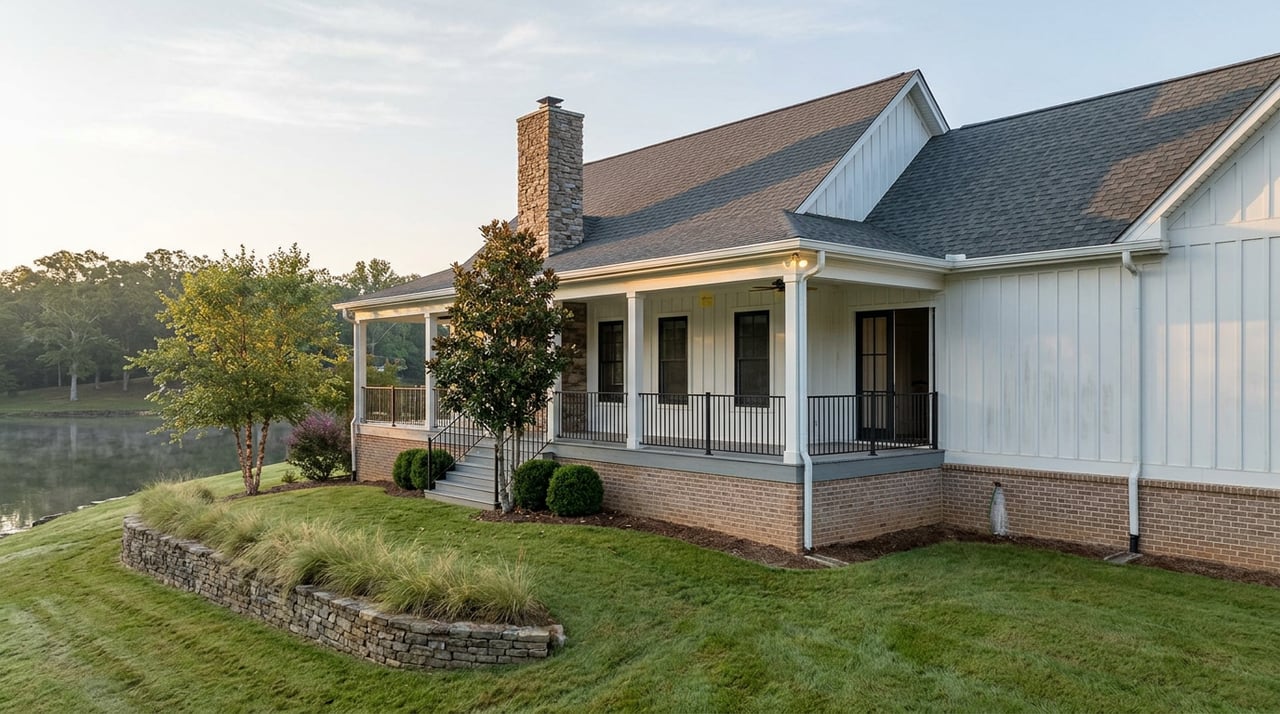
A buyer under contract on a lakefront home outside Connelly Springs pulls up the listing photos one more time before closing. Wide dock, covered slip, a ladder into deep water. It's in nearly every photo of the property, so it feels like part of what's being purchased. Then the closing attorney asks a question nobody raised during inspection: has the dock's Duke Energy Lake Use Permit been transferred into the buyer's name?
It hadn't. And when the transfer application went in, it surfaced that the dock had been widened years earlier without anyone resubmitting the change for approval.
This is the part of a Lake Rhodhiss purchase that rarely makes it into a listing description. The dock is never really sold along with the house. It's permitted, and Duke Energy permits are tied to the person who applied for them, not to the deed.
The Permit Doesn't Follow the Sale on Its Own
Every private dock on Lake Rhodhiss sits inside the Catawba-Wateree Shoreline Management Plan, the framework Duke Energy uses to govern piers, boathouses, and shoreline stabilization across the eleven lakes in the system, Rhodhiss included. Structures built or modified within that project boundary require written approval from Duke Energy Lake Services before work begins.
What catches buyers off guard is what happens after the work is done. The permit stays associated with whoever applied for it. If a seller never formally transferred an inherited or purchased dock, the new owner has to apply to put it in their own name, and that transfer request is exactly what surfaces whether the structure on the water still matches what was actually approved. A seller with no permitting history to hand over, or a dock that's been extended, roofed, or rebuilt since the original approval, hands the new owner a compliance problem the day the closing documents are signed.
None of this shows up on a home inspection. It shows up in a permit file that most buyers never think to request until someone tells them to.
The Rule That Changed on July 1, 2026
For years, one strategy worked well on Rhodhiss and every other Duke Energy lake in the Carolinas: buy a vacant shoreline lot at land prices, get the dock permitted first, then build the house whenever it made financial sense. The dock, once approved, effectively locked in the lot's value as true waterfront rather than water-adjacent.
That strategy closed on July 1, 2026. Duke Energy stopped reviewing private dock applications on any lot where a home hasn't been built yet, a policy that applies across every Duke Energy lake, not just Rhodhiss. The sequence is reversed now. The house has to go up first. Only then can the dock permit move forward.
For anyone treating a Rhodhiss lot as an investment play, this is the number that actually matters, more than the price per acre. A vacant lot without a completed home no longer carries dockable status as an option you can activate on your own timeline. It carries it as a promise, contingent on construction happening first. That changes how a lender, an appraiser, and eventually a future buyer should value undeveloped shoreline on this lake.
"Dockable" Is a Status That Expires
Marketing language on lake lots tends to treat dockable as a permanent fact, stamped once and true forever. It isn't. One recent Lake Rhodhiss Estates listing noted plainly that the lot had been deemed dockable by Duke Energy years earlier, but that approval had since expired and would need a fresh application before anyone could actually build.
A buyer relying on an old listing sheet, or on a neighbor's dock as proof that theirs will be approved too, is relying on something that ages out. The only way to know current status is to confirm it directly with Duke Energy Lake Services before writing an offer that depends on it.
The Water and Sewer Question Changes by Subdivision, Not by Lake
Lake Rhodhiss gets treated as one market, but the ground underneath the water access is not uniform. Edgewater, a small lakefront community in Granite Falls about ten minutes northwest of Hickory, requires individual septic systems and private wells for every home. The Waterfront Club, a gated community on the lake, requires private septic as well. Lake Rhodhiss Estates, by contrast, advertises public sewer service to its lots. Lakeside Reserve, a newer gated community with a clubhouse, pickleball courts, and a kayak launch, still requires new lots to pass a Burke County perc test for septic before a home can be built.
| Community | Utility Setup |
|---|---|
| Edgewater (Granite Falls) | Individual septic and well required |
| The Waterfront Club | Private septic required |
| Lake Rhodhiss Estates | Public sewer |
| Lakeside Reserve | Septic, subject to county perc test |
That split matters at closing in ways a median home price never captures. A septic system adds installation cost on raw land, an inspection line item on resale, and a maintenance obligation that public sewer removes entirely. Two lots a half mile apart on the same lake can carry very different long-term cost profiles depending on which subdivision drew the line.
What to Confirm Before You Write an Offer
A few questions, asked early, prevent the closing-day surprise described above.
- Request the Duke Energy Lake Use Permit number for any existing dock and confirm the structure matches what was actually approved.
- If the lot is vacant, confirm in writing that dock approval will only proceed after a home is constructed, per the July 2026 policy.
- Start the permit transfer application before closing rather than after, so any compliance gap surfaces while there's still room to negotiate.
- Ask which subdivision-specific utility system serves the lot. Septic and well is not a given just because a property sits on Lake Rhodhiss.
None of these are exotic requests. They're the kind of due diligence that separates a smooth Rhodhiss closing from one that stalls out over a permit nobody thought to check.
FAQ
Does every home on Lake Rhodhiss come with a dock? No. Dockable status is a Duke Energy designation tied to specific shoreline classifications under the Shoreline Management Plan, and not every parcel qualifies.
Can I buy a vacant lot and add a dock before I build? Not anymore. As of July 1, 2026, Duke Energy will not review a private dock application for a lot without a home already built on it.
Is Lake Rhodhiss on septic or public sewer? It depends on the subdivision. Communities like Lake Rhodhiss Estates advertise public sewer, while others like Edgewater and The Waterfront Club require private septic and well.
Lake Rhodhiss rewards buyers who ask the right questions before they fall for the photos. If you're evaluating a specific lot or lakefront listing on Rhodhiss and want a second set of eyes on the permit history and utility setup before you write an offer, Osborne Real Estate Group works this lake regularly and can help you get the answers before they become closing-day surprises. Reach out for a free home valuation and a straight answer on what a specific property actually includes.